Visceral Waves
This is the 5th in the series of Fluck Tuesdays.
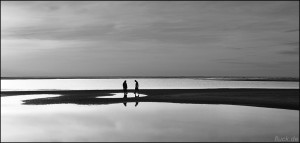
Inspired by Oliver Fluck’s “Low Tide.”
Photo courtesy of Oliver Fluck and sincere gratitude for the collaboration which resulted in eight very unique fiction pieces. These were the initial stories. Then I continued to create 23 more and that is how Collection of Auguries came to be. Grateful for the synchronicity which brought us together so these stories could be told with the help of a lens.
Sleeplessly
I watch over
the spring night—
but no amount of guarding
is enough to make it stay.
~ Izumi Shikibu
Sometimes he literally believed that he could exhale her into life. Right there. In front of him. And everything would carry on as they had always wanted.



This is so beautiful, Annie. All the words are there in the mind. And there’s remembrance. Words which can’t be put on the page, for to write them down would be to forget.
Really like how you bookended the first and last paragraphs.
“Sometimes he literally believed that he could exhale her into life.” Absolutely beautiful, Annie. Love this!
Annie, this is gorgeous – the picture and the words. I just love it.
“Sometimes he literally believed that he could exhale her into life.”
@Sarah – Oops! I didn’t finish my thought… ahem…
(Love, love, love)
(Love, love, love)
(Love, love, love)
Hi Annie, I like the way you get the dialogue going back and forth in this piece. It reminds me a little of one of my writing books (frantically been searching my office/house for the last 15min, can’t find it) about dialogue and making the off-kilter in how it goes back and forth. The come closer line does this for me, part of the word play initially but then it transitions into something more emotional. Like the piece as a whole.
[…] progresses, we’ll watch the amazing colors of the sunset over the ocean. Annie Q Syed of Trial of Words: Writings and Fragments will share a touching and haunting story about the ocean and show us amazing photographs. Josie […]
I found my book on dialogue; only took me about two weeks. The book is “Writing Dialogue” by Tom Chiarella. In one chapter he categorizes dialogue by the direction. He describes one “misdirected” where the dialogue veers in odd directions and states that sometimes this can sound like more natural dialogue. Your dialogue had a similar haunting quality to it.
I read it once. Then I read it aloud.
It is different when one can see and hear the words. It has a cadence, that mirrors the subtle lapping of the waves at low tide. It is soft and moving, there is a peace and calm, which I find comforting.
I liked the symmetry of having the first paragraph return at the end, just as the high tide will return. It is as inevitable as the moon and and the sun.
A wonderful post indeed.
You are so lyrical, and your words do justice to your beauty. What can I say?
This is very lovely, Annie. I really appreciate the ambiguity between speaker and spoken inside the bookends: the absence of gendered pronouns invites one to wonder…(?) But not over long, as it matters not who says what but that their love is animate.